
Are journalists destroying NVIDIA?
Are a few anonymous sources, a well-timed newspaper article and a little scandal in someone’s private life enough to cost them the leadership of a multitrillion-dollar company they built themselves? Apparently, yes. At least, that is very much what Jensen Huang’s story suggests.
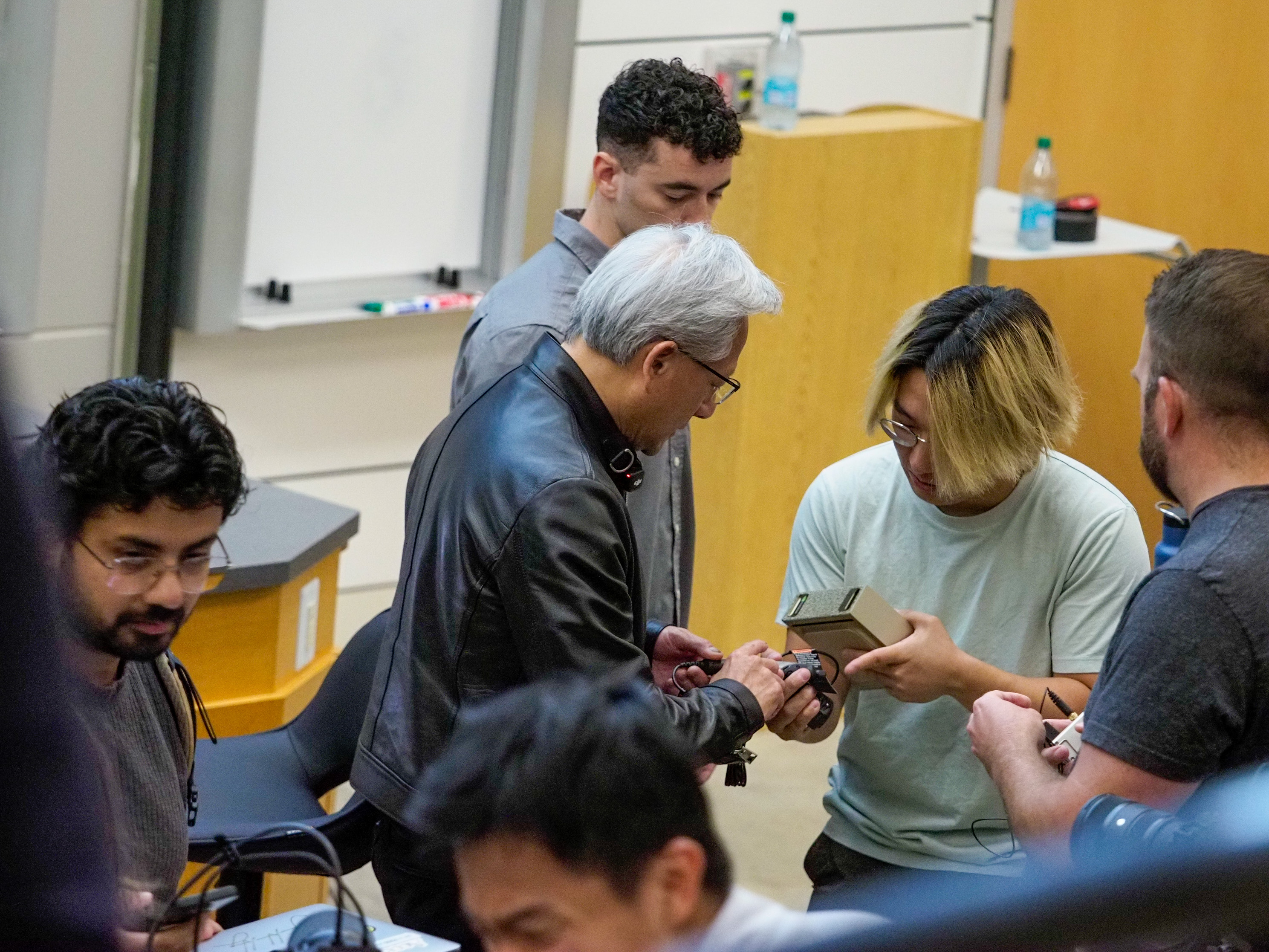
Jensen Huang founded NVIDIA with two partners in 1993. He led the company for 33 years, turning a graphics processor manufacturer into one of the most important technology companies in the artificial intelligence revolution. He built a business whose products are now essential to much of the AI industry.
Then, on November 12, 2026, his resignation was announced. Not because he had bankrupted the company. Not because he had been proven to have sold trade secrets. And not because a court had found him guilty of a crime. But in the middle of a media scandal.
How do you destroy a career?
The story first drew widespread attention on October 29, 2026, when The New York Times, citing US intelligence information, reported that Jensen Huang may have had a relationship with a woman identified as a Chinese spy. The woman was Alice Huang, a former executive at a Singapore-based technology company that had previously come under investigation over possible violations of US chip export restrictions.
And this is where the story starts getting really interesting. The United States has not publicly presented evidence that Alice Huang worked for Chinese intelligence. China explicitly denies the allegations. Nor is there any known evidence that Jensen Huang passed trade secrets to anyone.
Yet the Chinese spy story appeared in the press. And from that point on, almost everything changed. Because what happens when a journalist writes that a business leader has a relationship with a suspected spy? The reader immediately connects the two. The next article asks whether he knew about the spying. By the third, the discussion can turn to the national security risk the relationship may have posed.
Except the allegation underpinning the whole story still has not been publicly proven. You do not have to say that someone was spying. You just have to get everyone thinking about it.
Then came his private life
The next chapter was no longer really about national security. The press began digging into Jensen Huang’s private life. It emerged that he had had an extramarital affair, followed by further reports about other alleged relationships, including with NVIDIA employees.
So what? I am asking seriously. What business is this of shareholders, journalists or the public?
Jensen Huang did not sign up to be NVIDIA’s moral role model. He ran a technology company, and he did so with exceptional results. His marriage is his and his family’s business. Not the internet’s.
If someone abuses their power, that can be investigated. But since when does a romantic relationship, in itself, prove that someone is unfit to run a company? And above all: how did we go, in just a few weeks, from a suspected Chinese spy to the world’s press dissecting a technology company founder’s private life?
Hundreds of billions of dollars over a newspaper article?
According to Reuters’ November 16 report, NVIDIA’s market value has fallen by about $800 billion since the scandal broke. Eight hundred billion dollars. Of course, many factors influence a listed company’s share price, and the entire sum cannot simply be blamed on a few newspaper articles. But the timing is certainly striking.
We are talking about a company whose technology the world’s largest AI developers rely on. A leader who shaped that company’s direction for decades and whose personal relationships also played a significant role in the industry’s development.
And now NVIDIA is looking for a new CEO. Why? Because a few serious allegations were published about someone, with their most important element still unproven in public? Is this really how one of the world’s most important technology companies should operate?
Who leaked it, and why now?
This may be the part of the whole story that interests me most. According to press reports, US intelligence may have had information about Alice Huang and her relationship with Jensen Huang long before the scandal broke.
So why did it become public in October 2026? Who gave the information to the journalists? And for what purpose?
How can we even know whether the person leaking the information gave journalists the full picture? What if they shared only the details that supported a particular story?
It is also worth asking who might have an interest in removing Jensen Huang from NVIDIA’s leadership. Could there be business interests? Political interests? Interests tied to the US–China technology race? We do not know. But why should we not ask these questions, when journalists are free to ask far more serious ones about Jensen Huang?
And who investigates the journalists?
The press is fond of examining corporate leaders’ relationships, finances and potential conflicts of interest. But does anyone do the same for journalists?
NVIDIA’s share price plunged in the wake of the scandal. And in the stock market, money can be made when prices fall as well as when they rise. Short selling, for example, allows precisely that.

Has anyone examined whether the journalists who broke the scandal, their publishers or their anonymous sources held positions betting on a fall in NVIDIA’s share price before the articles were published? Were there unusual short positions in the days immediately before publication? Who profited most from the drop? And did they have any connection to the people who made the story public?
I know of no public evidence establishing such a connection. But I also know of no investigation that has meaningfully clarified this specific possibility. Yet when a newspaper article appears amid market movements worth hundreds of billions of dollars, perhaps these questions deserve to be asked too.
Jensen Huang spent 33 years building NVIDIA. A media scandal ended his leadership career in a matter of weeks. And while everyone investigates Jensen Huang’s relationships, who is investigating the interests of those who started the scandal?
Sources: NVIDIA – official CEO transition announcement, November 12, 2026; Reuters – Jensen Huang’s resignation; Reuters – the campaign for his return, November 16, 2026.